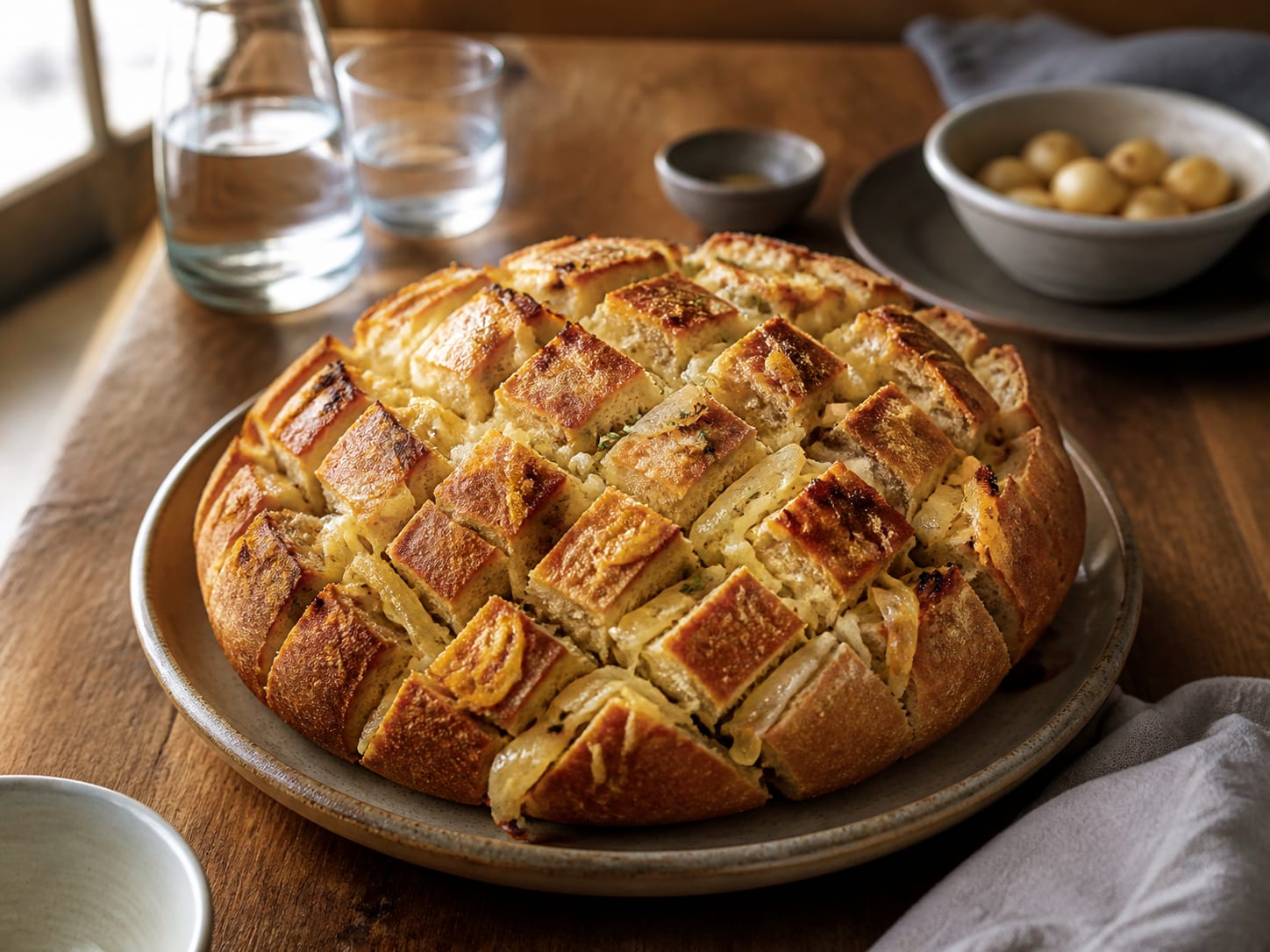
Zwiebelbrot für Fondue und Raclette (onion bread for fondue and raclette)
A sturdy round loaf studded with deeply caramelised onions, baked with a thick, chewy crust specifically so it holds together when speared on a fork and dragged through melted cheese, rather than crumbling apart like a soft sandwich bread would. Cooling the caramelised onions fully before folding them into the dough is what keeps their heat from killing the yeast during the final knead.
Christoph's onion bread for fondue and raclette, the onions cooled fully before folding in so their heat doesn't kill the yeast.
Ingredients
Units
Temperature
Servings
Caramelised onions
- 400 g onion, thinly sliced rounded
- 20 ml olive oil rounded
- 5 g sugar rounded
Dough
- 500 g flour rounded
- 7 g instant yeast rounded
- 10 g fine salt rounded
- 320 ml water, lukewarm rounded
- 15 ml olive oil rounded
Dietary labels are a guide, not a guarantee. If you have an allergy, read the ingredients yourself.
Method
- Heat the olive oil in a pan over low heat. Add the onions and sugar, and cook very slowly, stirring occasionally, for 35 to 40 minutes, until deeply caramelised and a rich brown. Let cool completely.
- Combine the flour, yeast and salt in a large bowl. Add the water and olive oil, and mix to a rough dough. Knead for 8 to 10 minutes, until smooth and elastic.
- Flatten the dough and fold in the fully cooled caramelised onions, kneading gently until evenly distributed.
- Cover and let rise for 60 minutes, until doubled.
- Shape into a round loaf and place on a lined baking sheet. Let rise, covered, for 30 minutes.
- Preheat the oven to 220°C (fan). Score the top with a few shallow cuts. Bake for 30 to 35 minutes, until the crust is deeply golden brown and the internal temperature reads at least 96°C.
- Cool completely on a rack before slicing.
Notes
- Let the caramelised onions cool completely before adding them to the dough. Warm onions can kill the yeast on contact or raise the dough’s temperature enough to throw off the rise; cooled fully, they fold in without disrupting fermentation.
- Caramelise the onions properly, low and slow. Rushed, high-heat onions turn bitter rather than sweet, and that bitterness comes through clearly once baked into the bread.
- This bread is deliberately sturdy, not soft. A thick, chewy crust and dense crumb are what let it hold together on a fork through repeated dips into hot cheese; a softer sandwich-style dough would fall apart.
- Best eaten the day it’s baked, alongside fondue or raclette; day-old slices are excellent toasted.
Ingredient substitutions
- A handful of fresh thyme folded in with the onions adds a herbal note.
- A pinch of caraway in the dough is a traditional pairing with onion bread.
- This loaf also stands well on its own, sliced and served with butter, not just as a fondue accompaniment.
From Christoph Mayer