Main Chinese restaurant-style Chinese Dairy-free Nut-free
Shanghai Noodles
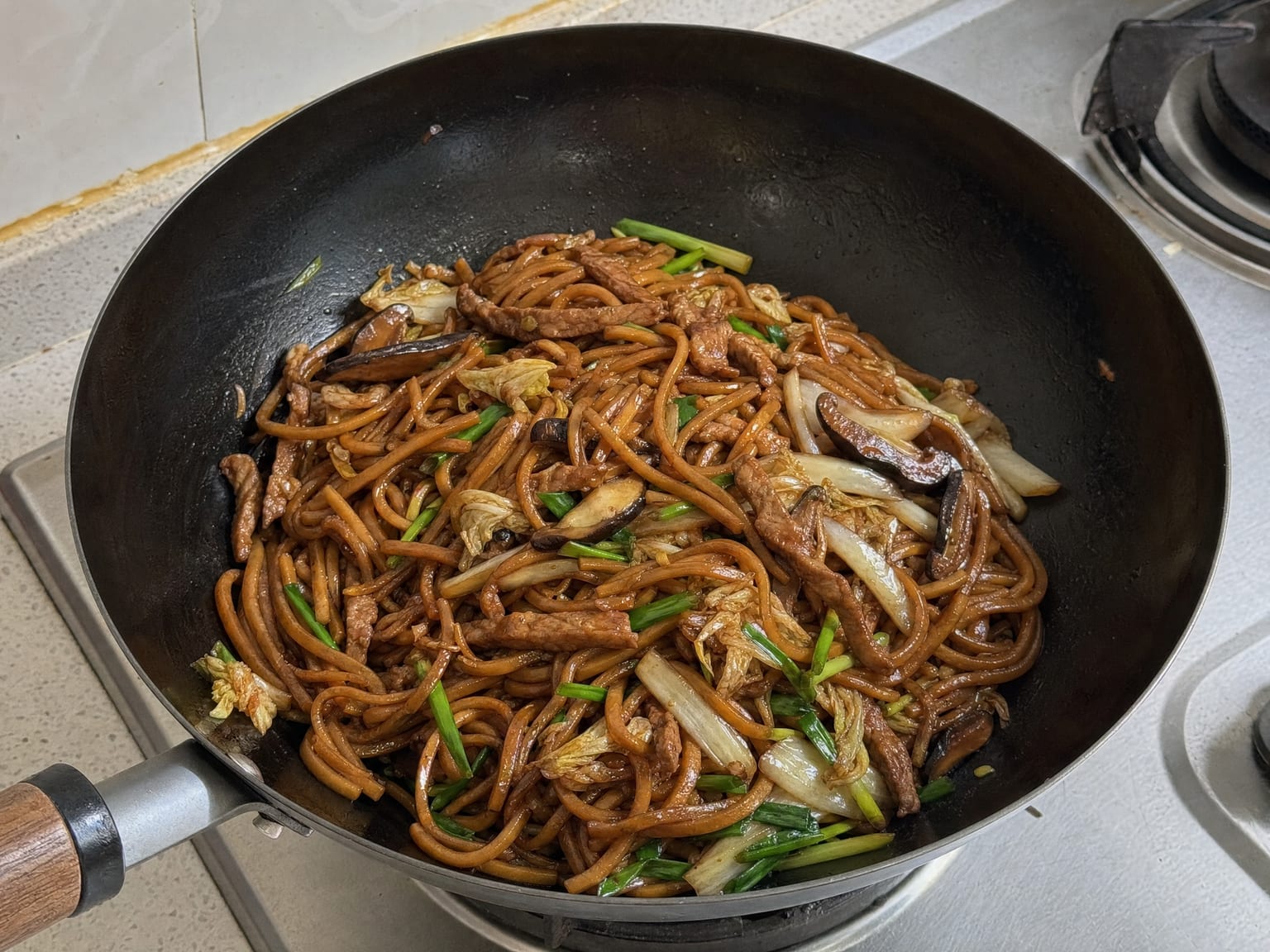
Thick chewy wheat noodles stir-fried dark with pork, napa cabbage and mushrooms, the colour coming from dark soy sauce rather than from long cooking. This is the one dish on the shelf where you keep adding dark soy until the noodles look right, because the depth of brown is the point and different brands stain very differently.
Prep20 min
Cook12 min
Servings2
Adapted from The Woks of Life's Shanghai fried noodles, keeping their approach of adding dark soy until the noodles reach the colour you want.
Ingredients
Written for a 30 cm pan
Units
Temperature
Servings
Pork and marinade
- 250 g pork shoulder or loin, cut into thin matchsticks; chicken works too rounded
- 8 g cornflour rounded
- 15 ml light soy sauce rounded
- 15 ml Shaoxing wine rounded
Sauce
- 30 ml dark soy sauce, start here and add more until the colour is right rounded
- 22 ml light soy sauce rounded
- 10 g sugar rounded
- 60 ml water or chicken stock rounded
Noodles and vegetables
- 400 g fresh Shanghai noodles, thick round wheat noodles; see substitutions rounded
- 40 ml neutral oil rounded
- 3 garlic cloves, minced rounded
- 150 g shiitake mushrooms, sliced rounded
- 300 g napa cabbage, shredded, stems and leaves separated rounded
- 3 scallions, cut into 5 cm lengths rounded
Dietary labels are a guide, not a guarantee. If you have an allergy, read the ingredients yourself.
Method
- Marinate the pork with the cornflour, light soy sauce and Shaoxing wine for 15 minutes.
- Loosen the noodles. Fresh Shanghai noodles come tightly packed. Blanch them for 30 to 60 seconds in boiling water, just until they separate, then drain and rinse briefly under cold water. They are already cooked; this is only to unstick them.
- Mix the sauce and keep it beside the stove.
- Sear the pork and remove it. Get the wok smoking, add half the oil, spread the pork in one layer, leave 60 seconds, then toss for another minute until browned. Tip onto a plate.
- Cook the vegetables. Add the rest of the oil, then the garlic for 15 seconds, the mushrooms for 2 minutes until they have given up their water, then the cabbage stems for 2 minutes and the leaves for 1 minute.
- Add the noodles and the sauce. Tip in the drained noodles, pour the sauce around the rim of the wok, and toss for 2 to 3 minutes until every strand is evenly coloured.
- Judge by eye and add more dark soy if needed. The noodles should be a deep even chestnut brown. Dark soy sauces vary enormously between brands, so add another teaspoon at a time until it looks right. This is the one place in Chinese cooking where you season for colour first and taste second.
- Return the pork, add the scallions, toss once and serve.
Notes
- Thick noodles, not thin. Shanghai noodles are round, chewy and about the thickness of a pencil lead. Thin noodles turn this into a different dish; that dish is chow mein and it is also here.
- Dark soy is colour, light soy is salt. Using only dark soy makes it bitter and using only light leaves it beige. The recipe needs both.
- Napa cabbage releases a lot of water. Cook the stems until they have collapsed and the pan is dry again before the noodles go in, or the sauce will not cling.
- Chicken works as well as pork and is the other common restaurant option. Beef is less traditional here.
- Leftovers are good cold or reheated in a dry pan.
Ingredient substitutions
- Fresh Shanghai noodles are sold refrigerated at Asian grocers in Germany and Canada, often labelled Shanghai style or thick wet noodles. Fresh udon is the closest substitute and works well. Thick dried wheat noodles cooked to just done are the everyday fallback; spaghetti is not a substitute, being too smooth to hold the sauce.
- Dark soy sauce has no substitute for the colour. Without it use extra light soy and accept a paler dish, or add a teaspoon of molasses for colour and a little sweetness.
- Napa cabbage can be replaced with green cabbage, which is firmer and needs an extra minute.
Sources consulted
Good with
Sources consulted
From Christoph Mayer