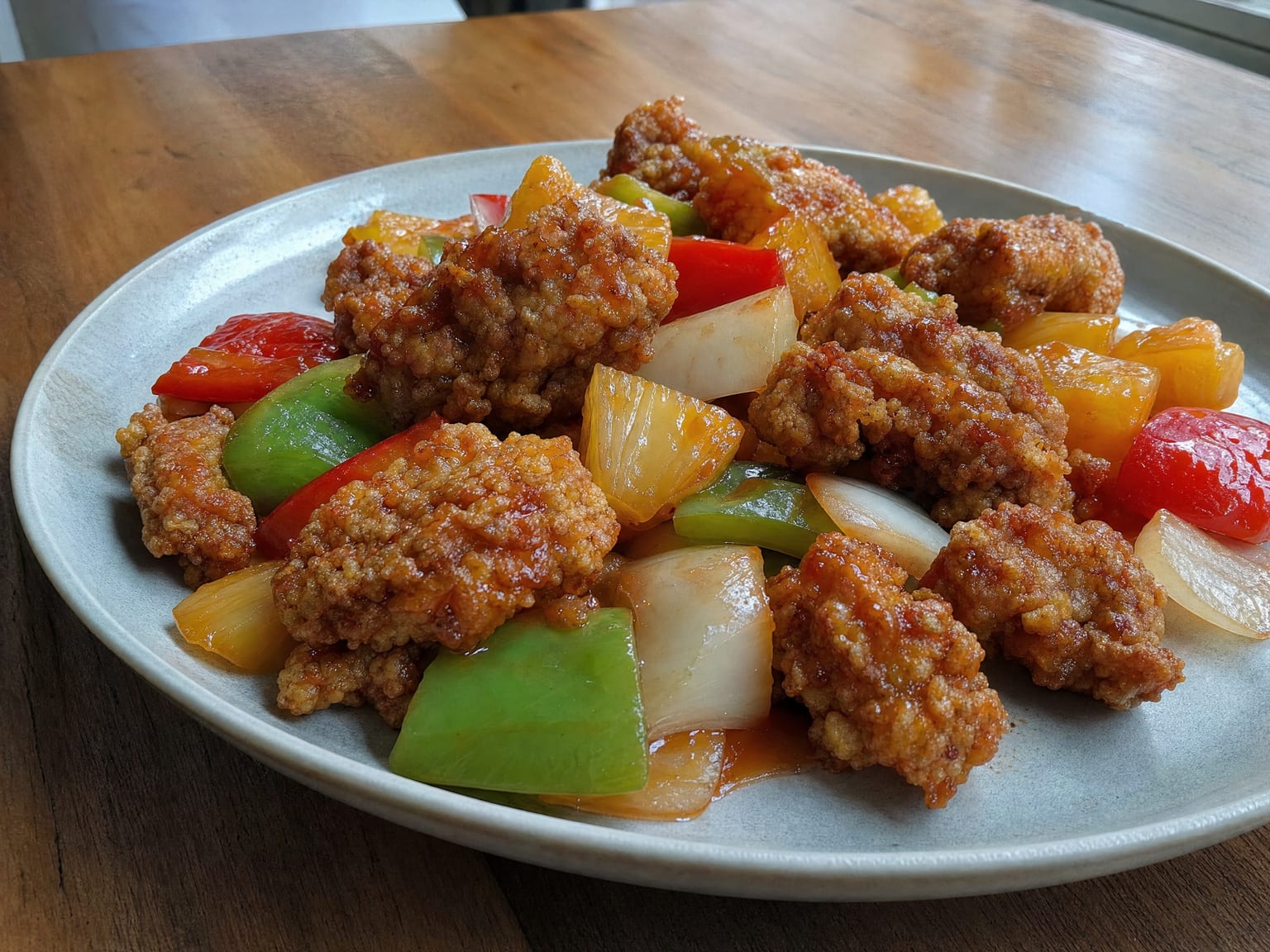
Main Chinese restaurant-style Chinese Dairy-free Nut-free
Sweet and Sour Pork
Double-fried battered pork in a glossy red-orange sauce, where the second fry is what keeps the coating crisp under a wet sauce instead of collapsing into softness within a minute. The sauce is balanced with pineapple juice and cider vinegar rather than pure sugar, and the pork is tossed through it for seconds only, off the heat, which is the difference between crunchy and soggy.
Adapted from RecipeTin Eats, keeping her grated onion marinade and the double fry, with the sauce balanced by pineapple juice and cider vinegar.
Ingredients
Written for a 4 L pot
Units
Temperature
Servings
Pork and marinade
- 600 g pork neck or shoulder, cut into 2 cm cubes rounded
- 30 ml light soy sauce rounded
- 1 onion, finely grated, juice and all rounded
- 5 g fresh ginger, finely grated rounded
- 1 garlic clove, finely grated rounded
Coating and frying
- 75 g cornflour, mixed into the marinated pork rounded
- 90 g cornflour, for the dry coating rounded
- 1 L neutral oil, for deep frying rounded
Sauce
- 80 g sugar rounded
- 60 ml cider vinegar rounded
- 45 ml pineapple juice, from the tin of pineapple below rounded
- 45 ml ketchup rounded
- 15 ml light soy sauce rounded
- 5 ml Worcestershire sauce, check the label for anchovy if cooking vegetarian rounded
- 10 g cornflour rounded
- 125 ml water rounded
Vegetables
- 15 ml neutral oil rounded
- 1 onion, cut into 2.5 cm squares rounded
- 150 g red and green peppers, cut into 2.5 cm squares rounded
- 150 g pineapple pieces, tinned in juice, drained and patted dry rounded
Dietary labels are a guide, not a guarantee. If you have an allergy, read the ingredients yourself.
Method
- Marinate the pork. Mix the cubes with the soy sauce, grated onion, ginger and garlic and leave 20 minutes. Grated onion is a tenderiser as much as a flavouring, and its juice works into the meat quickly.
- Coat in two stages. Stir the first 75 g of cornflour into the marinated pork until every piece is wrapped in a wet paste. Then put the remaining 90 g in a bowl and toss the pieces through it one handful at a time, pressing so the dry starch clings in a rough shaggy layer. Those rough edges are what fry into crunch.
- Mix the sauce in a jug and stir it again before it goes near the pan.
- First fry at moderate heat. Heat the oil to 170°C and fry the pork in three batches for about 4 minutes each, until pale gold and cooked through. Lift onto a rack, not paper. This fry cooks the meat.
- Rest the pork 10 minutes while you cook the vegetables. Resting lets steam escape from inside the coating instead of softening it.
- Second fry, hot and short. Bring the oil up to 190°C and fry the pork again in batches for 60 to 90 seconds, until deep golden and audibly crisp. This fry builds the crust that survives the sauce.
- Cook the vegetables and sauce. In a wide pan, fry the onion and peppers in the oil for 2 minutes so they keep their snap, add the pineapple for 30 seconds, then pour in the stirred sauce and boil 1 to 2 minutes until it turns glossy and thick.
- Combine off the heat, at the table’s pace. Take the pan off the stove, tip in the pork, toss for no more than 15 seconds and serve immediately. Every extra second in the sauce is crunch lost.
Variations
- Sweet and sour chicken balls. Use 600 g chicken thigh cut into chunks, same coating and double fry. For the pub-style ball, use a wet batter of 100 g flour, 50 g cornflour, 1 tsp baking powder and about 150 ml cold water instead of the dry coating.
- Pineapple chicken. As the chicken version, doubling the pineapple and cutting the ketchup by half for a lighter, fruitier sauce.
Notes
- The double fry is the recipe. One fry gives you pork that is crisp for about thirty seconds. If you only have time for one, sauce it at the table and accept the difference.
- Toss off the heat and serve at once. This is not a dish that waits. Have the rice on the table before the pork meets the sauce.
- Pat the pineapple dry. Wet fruit dilutes the sauce and makes it slide off.
- Ketchup is not a cheat here. Restaurant sweet and sour sauce in the West is built on it, and it supplies the colour, sweetness and acidity together.
- Leftovers will not be crisp. They are still good, but treat them as a different dish and reheat in a hot oven rather than a microwave.
Ingredient substitutions
- Cider vinegar can be replaced with 45 ml of plain white vinegar, which is sharper, or with rice vinegar, which is milder and needs a little less sugar.
- Worcestershire sauce usually contains anchovy. For a vegetarian version use a vegan Worcestershire or simply leave it out and add a few drops more soy.
- Pork neck is the right cut, as in the char siu. Loin works but is drier and needs the marinade time kept to the full 20 minutes.
Sources consulted
Good with
Sources consulted
From Christoph Mayer