Main Chinese restaurant-style Chinese Dairy-free Nut-free
Dry Garlic Ribs
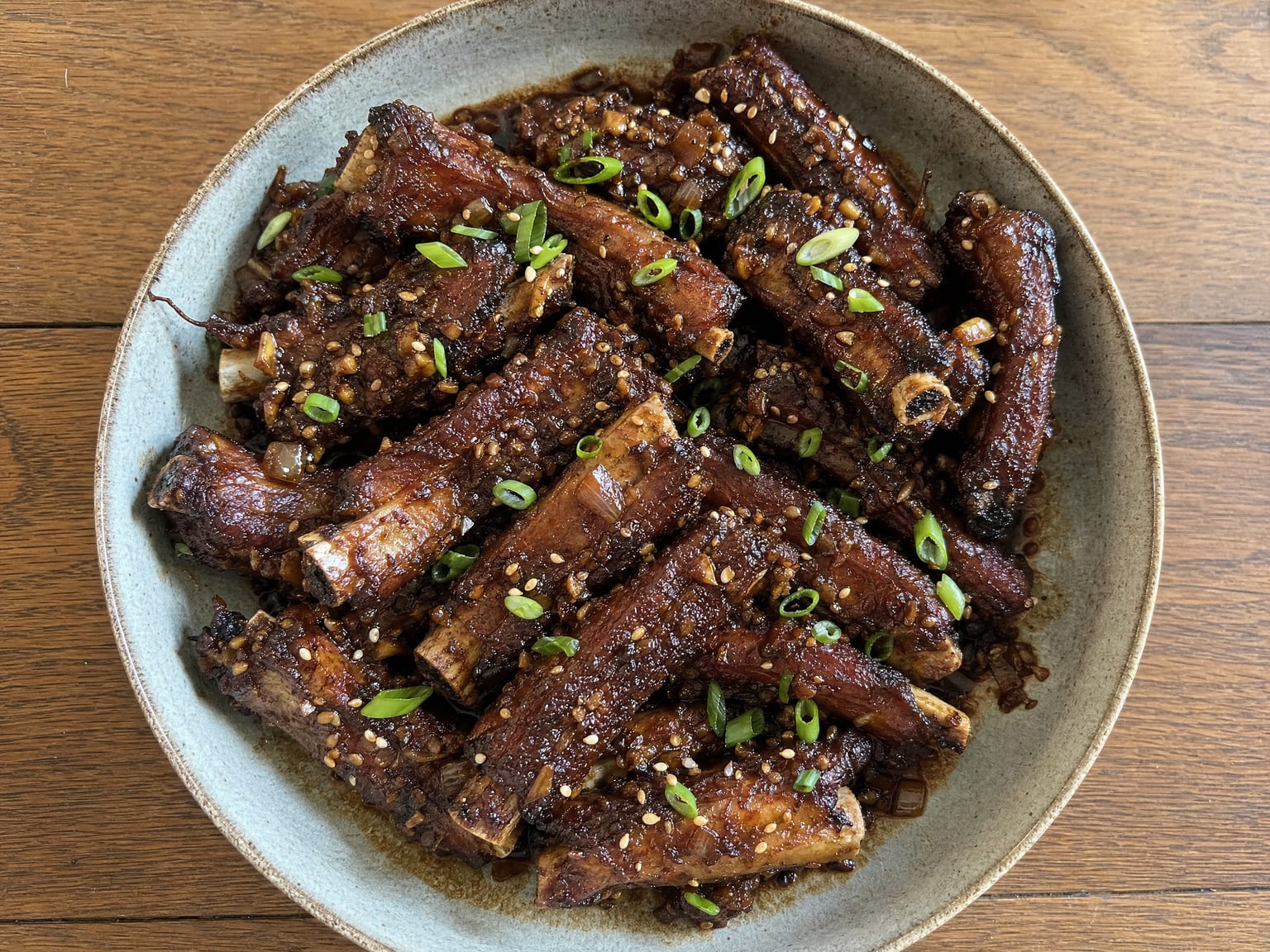
The other rib on every Chinese-Canadian menu, and the one people argue about, because dry garlic ribs are not dry at all. They are braised in a dark garlicky broth until the sauce reduces onto them, so the name means without a thick glaze rather than without sauce. Slow-braising rather than deep-frying is what makes these tender all the way through, and it is why they reheat better than any other rib here.
Adapted from Lord Byron's Kitchen copycat Chinese restaurant dry garlic ribs, keeping the braise-then-reduce method and the whole head of garlic with mustard.
Ingredients
Written for a 23 × 33 cm dish
Ribs
- 1 1/2 kg pork ribs, membrane removed, cut into individual ribs rounded
- 5 g fine salt rounded
- 2 g black pepper rounded
Braising liquid
- 375 ml chicken or beef stock rounded
- 200 g brown sugar rounded
- 60 ml light soy sauce rounded
- 15 ml dark soy sauce rounded
- 12 garlic cloves, minced, a whole head rounded
- 1 onion, finely chopped rounded
- 60 ml yellow mustard, the American style; see substitutions rounded
- 30 ml rice vinegar rounded
To finish
- 2 scallions, finely sliced rounded
- 8 g toasted sesame seeds (optional) rounded
Dietary labels are a guide, not a guarantee. If you have an allergy, read the ingredients yourself.
Method
- Prepare the ribs. Pull the papery membrane off the back of the rack, which comes away in one sheet if you get a corner up with a knife and grip it with kitchen paper. Cut between the bones into individual ribs and season with salt and pepper.
- Brown them first. Sear the ribs in a dry hot pan in batches, 2 minutes a side, until browned. This is not strictly traditional and takes ten minutes, but it is the difference between a braise that tastes deep and one that tastes only sweet.
- Mix the braising liquid. Whisk the stock, brown sugar, both soy sauces, garlic, onion, mustard and rice vinegar together.
- Braise covered at 160°C. Put the ribs in a deep dish, pour the liquid over, cover tightly with foil, and cook 90 minutes. They should be tender enough that a fork slips in easily.
- Uncover and reduce. Take the foil off, turn the ribs to coat, and return them uncovered for 25 to 35 minutes, turning once or twice, until the liquid has reduced to a dark syrup that clings. Watch the last ten minutes; there is a lot of sugar in the dish and it goes from syrupy to scorched quickly.
- Serve scattered with scallions and sesame seeds, with rice and something sharp alongside.
Notes
- The name is misleading and always has been. Dry garlic ribs are saucy. The dry refers to how they are finished, reduced onto the meat rather than swimming in a glaze like honey garlic ribs. Every Chinese-Canadian restaurant serves both and they are genuinely different dishes.
- A whole head of garlic is correct. It mellows completely over 90 minutes of braising into something sweet and savoury rather than sharp.
- The mustard is not a mistake. Yellow mustard is in most Canadian restaurant versions and gives the acidity and slight bite that keeps 200 g of brown sugar from being sickly. You will not taste it as mustard.
- These are the best make-ahead dish on this shelf. Braise them a day ahead, refrigerate in the liquid, lift the set fat off the top, and reduce on the day. They are better for it.
- Keeps 4 days refrigerated and freezes well in the sauce.
Ingredient substitutions
- Yellow mustard is the mild American style, sold in both Germany and Canada. German mittelscharfer Senf is a good substitute; Dijon is sharper, so use two thirds the amount. Do not use wholegrain.
- Dark soy sauce provides colour. Without it use extra light soy plus a teaspoon of molasses.
- Brown sugar can be replaced with an equal weight of honey plus 30 g less liquid, though brown sugar gives the more authentic flavour.
Sources consulted
Good with
From Christoph Mayer