Main Chinese restaurant-style Chinese Dairy-free Nut-free
Honey Garlic Ribs
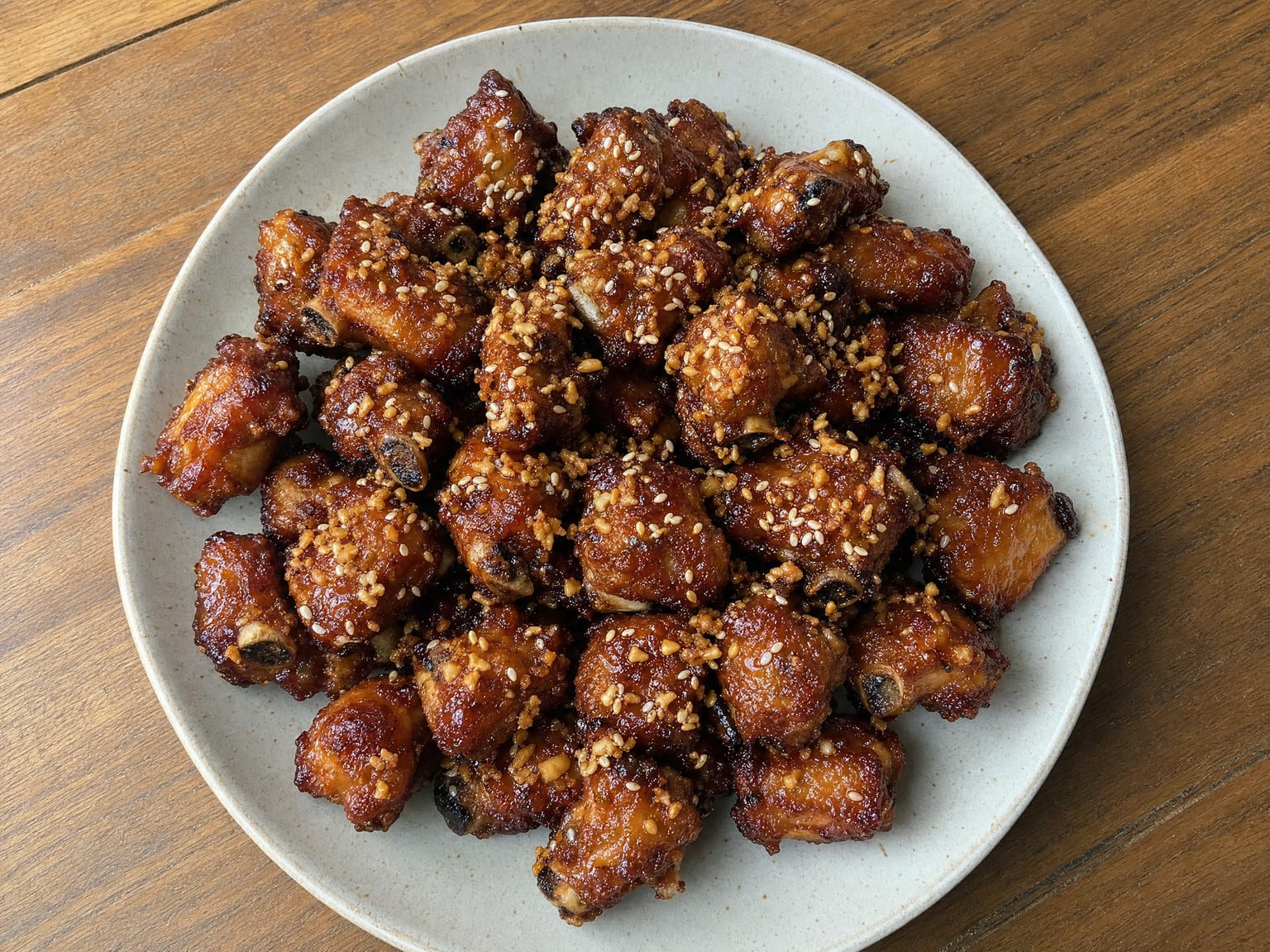
Cut ribs fried crisp and tossed in a sticky honey and garlic glaze, the Chinese-Canadian takeout staple that arrives in a foil tray and disappears before anything else on the table. The glaze is reduced separately until it sheets off a spoon and the ribs go in off the heat, because honey that boils with the ribs in it goes from sticky to burnt bitter in well under a minute.
Adapted from Auntie Emily's honey garlic pork ribs, keeping the cornstarch coating and the whole head of garlic, with the glaze reduced separately before the ribs go in.
Ingredients
Written for a 4 L pot
Ribs and marinade
- 1 1/6 kg pork riblets, cut across the bone into 4 cm pieces; ask the butcher rounded
- 30 ml light soy sauce rounded
- 15 ml Shaoxing wine rounded
- 10 g sugar rounded
- 3 g garlic powder rounded
- 3 g fine salt rounded
- 1 g ground white pepper rounded
Coating and frying
- 120 g cornflour rounded
- 1 L neutral oil, for deep frying rounded
Honey garlic glaze
- 30 ml neutral oil rounded
- 12 garlic cloves, finely minced, a whole head rounded
- 125 ml honey rounded
- 45 ml light soy sauce rounded
- 30 ml rice vinegar rounded
- 60 ml water rounded
- 5 ml toasted sesame oil rounded
- 8 g toasted sesame seeds rounded
Dietary labels are a guide, not a guarantee. If you have an allergy, read the ingredients yourself.
Method
- Marinate the ribs with the soy sauce, Shaoxing wine, sugar, garlic powder, salt and white pepper for at least 30 minutes, or overnight in the fridge.
- Coat in cornflour. Drain off any pooled marinade, then toss the pieces through the cornflour a handful at a time, pressing so it clings, and shake off the excess. Let them sit 10 minutes so the coating hydrates and grips.
- First fry at 165°C. Fry in three or four batches for 6 to 7 minutes each, until pale gold and cooked through. Riblets are small and cook faster than a rack, but they still need real time at moderate heat to become tender rather than tough. Drain on a rack.
- Make the glaze while they rest. Heat the oil in a wide pan over medium-low and fry the garlic gently for 2 to 3 minutes until fragrant and pale gold, not brown. Add the honey, soy sauce, rice vinegar and water and simmer 4 to 5 minutes until it reduces and sheets thickly off a spoon.
- Second fry at 190°C, 60 to 90 seconds per batch, until deep golden and crisp.
- Toss off the heat. Take the glaze pan off the stove, tip in the hot ribs, add the sesame oil and toss hard for 15 to 20 seconds until every piece is lacquered. Scatter with sesame seeds and serve at once.
Variations
- Honey garlic chicken wings. 1.2 kg wings, same marinade, same coating, first fry 8 minutes and second fry 2 minutes. The other half of that section of the menu.
- Honey garlic pork. Sliced pork shoulder instead of ribs, coated and fried the same way and tossed in the same glaze.
- BBQ ribs. Marinate the riblets in the char siu marinade overnight, roast at 200°C for 35 minutes on a rack over water, and glaze with honey in the last 10 minutes. This is what BBQ ribs means on a Chinese menu.
- Extra sticky. Add another 30 ml honey to the glaze and reduce a minute longer. This is closer to the sweeter takeout version.
Notes
- Reduce the glaze before the ribs meet it. Honey and soy boiled with fried ribs in the pan will scorch, and burnt honey is bitter in a way nothing fixes.
- Fry the garlic gently. A whole head of garlic sounds like a lot and is correct, but browned garlic turns acrid. Pale gold, low heat, 3 minutes.
- Two fries or none. A single fry gives ribs that go soft the moment the glaze lands.
- Ask the butcher to cut across the bone. Riblets, or ribs cut into 4 cm lengths, are what makes this finger food. A whole rack cut between the bones is a different dish.
- Best straight away. Leftovers are still good but the coating softens; reheat in a hot oven.
Ingredient substitutions
- Rice vinegar can be cider vinegar, which is fruitier, or white wine vinegar, which is sharper; cut it slightly.
- Shaoxing wine substitutes with dry sherry, or stock plus a splash of vinegar.
- Cornflour gives the lightest coating. Potato starch is equally good and slightly crisper.
Sources consulted
Good with
From Christoph Mayer