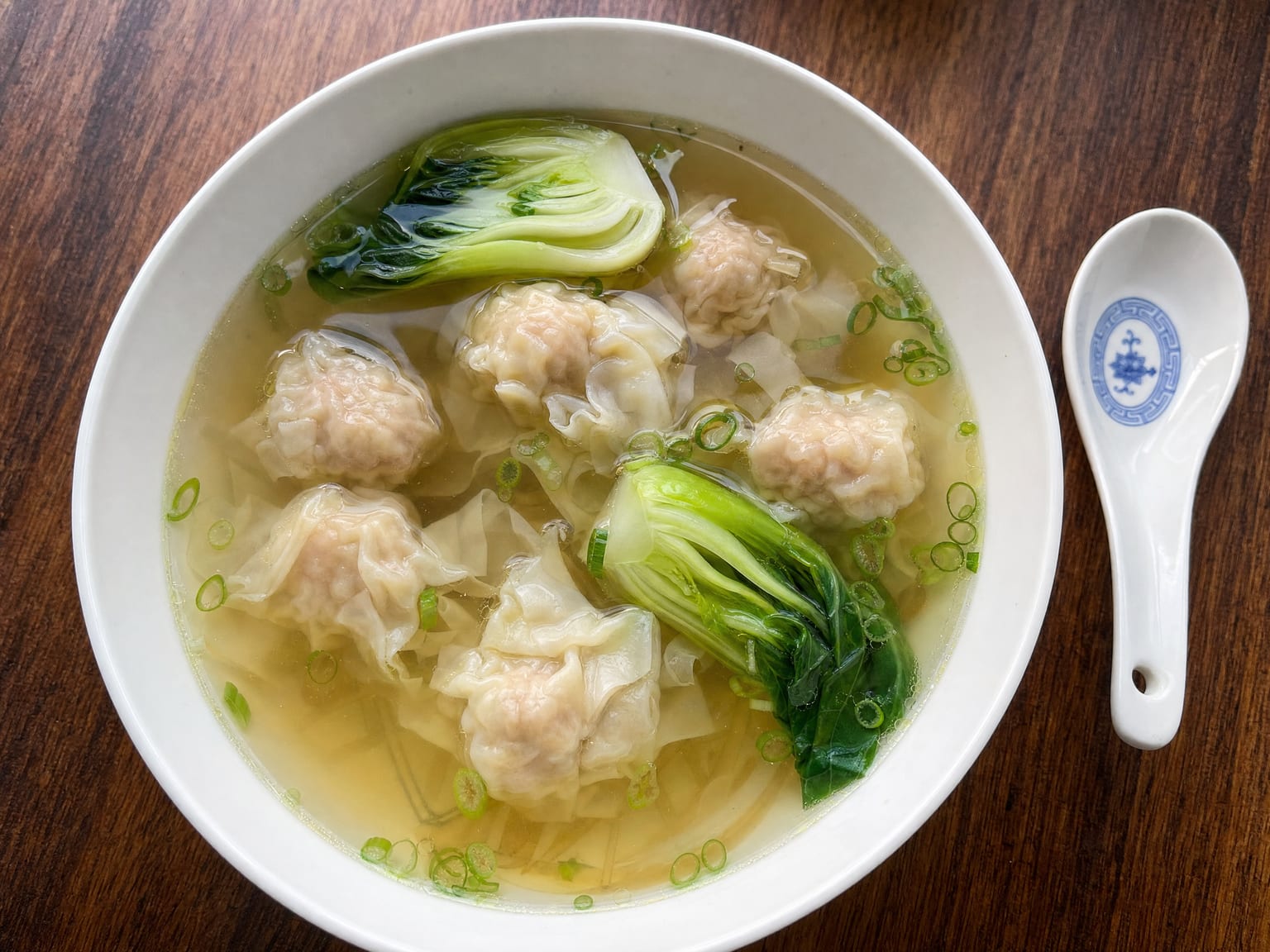
Soup Chinese restaurant-style Chinese Dairy-free Nut-free
Wonton Soup
Pork and prawn wontons in a clear seasoned broth, where the broth is built separately and stays clear because the wontons are boiled in a second pot of plain water and lifted across. Boiling them in the soup itself is what turns a clean Cantonese broth cloudy and starchy, and it is the difference between the version at a good restaurant and the one that tastes like dumpling water.
Adapted from RecipeTin Eats and The Woks of Life, keeping their pork and prawn filling ratio and the separate pot for boiling the wontons.
Ingredients
Written for a 4 L pot
Units
Temperature
Servings
Wonton filling
- 200 g minced pork, not too lean, about 20 percent fat rounded
- 200 g raw prawns, peeled and roughly chopped, some pieces left chunky rounded
- 15 g fresh ginger, finely grated rounded
- 2 scallions, very finely chopped rounded
- 15 ml light soy sauce rounded
- 30 ml Shaoxing wine, see substitutions rounded
- 3 g fine salt rounded
- 30 ml toasted sesame oil rounded
- 55 wonton wrappers, thin square ones, from the freezer at an Asian grocer rounded
Broth
- 1 1/2 L chicken stock rounded
- 2 garlic cloves, smashed but whole rounded
- 10 g fresh ginger, sliced into coins rounded
- 25 ml light soy sauce rounded
- 8 g sugar rounded
- 22 ml Shaoxing wine rounded
- 3 ml toasted sesame oil rounded
To serve
- 300 g bok choy, quartered lengthwise rounded
- 2 scallions, finely sliced rounded
Dietary labels are a guide, not a guarantee. If you have an allergy, read the ingredients yourself.
Method
- Mix the filling in one direction. Combine the pork, prawns, ginger, scallions, soy sauce, Shaoxing wine, salt and sesame oil, then stir hard with chopsticks or a spatula, always the same way round, for a full minute until the mixture turns sticky and pastes together. Stirring one way builds the protein into a springy bouncy filling; stirring randomly leaves it crumbly.
- Rest the filling 20 minutes in the fridge if you have time. It firms up and is far easier to wrap.
- Fill the wontons. Keep the stack of wrappers under a damp cloth so they do not dry out. Put about 2 teaspoons of filling in the middle of a wrapper, wet two edges with a fingertip of water, fold into a triangle and press out the air around the filling, then bring the two long corners together and pinch. Any shape that seals completely is a correct shape.
- Freeze what you are not cooking now. Lay them apart on a tray, freeze solid, then bag them. They go into boiling water straight from frozen.
- Make the broth. Simmer the stock with the smashed garlic and ginger coins for 10 minutes, then fish those out and season with the soy sauce, sugar, Shaoxing wine and sesame oil. Keep it hot but not boiling hard.
- Boil the wontons in a separate pot of plain water. This is the whole trick. Slide them in, stir once so they do not stick to the base, and cook about 4 minutes from fresh or 6 from frozen, until they float and the wrapper skirts go translucent and loose. Blanch the bok choy in the same water for the last minute.
- Assemble. Lift the wontons out with a slotted spoon straight into warm bowls, add the greens, ladle the clear hot broth over, and scatter scallions.
Notes
- Never boil the wontons in the broth. They shed starch and the broth goes cloudy and slightly gluey. Restaurants use two pots and so should you; it costs one extra pan and is the difference the whole dish turns on.
- Prawns chopped rather than minced give the filling its bite. Leave some pieces deliberately chunky. A filling blitzed smooth in a processor is a sausage, not a wonton.
- Press the air out as you fold. Trapped air expands and bursts wontons open in the pot.
- The filling is also the base of wor wonton soup, the loaded version with prawns, chicken, BBQ pork and vegetables. Make a double batch of wontons and you are halfway to both.
- Uncooked frozen wontons keep 3 months. Cooked ones do not keep well; the wrappers go soft.
Ingredient substitutions
- Shaoxing wine is the Chinese rice wine behind most of this shelf, and it is worth buying one bottle since it appears in nearly every recipe here. Asian grocers in Germany and Canada carry it, often near the soy sauces. Dry sherry is the standard substitute and is genuinely close. Mirin works but is sweeter, so cut any added sugar. For an alcohol-free version use stock with a splash of rice vinegar; the filling loses a little roundness.
- Wonton wrappers are sold frozen in most Asian supermarkets and are labelled thin or Hong Kong style. Do not substitute gyoza or dumpling wrappers, which are far thicker and give a doughy result in soup.
Sources consulted
Good with
Sources consulted
From Christoph Mayer